A Moment in Time:
Scientific Futures and Occultic Pasts in Nathaniel Hawthorne’s Modern Novel of 1851, The House of the Seven Gables
Antonio Roman Campos
NONFICTION
Introduction
In contemplating the setting of the nineteenth century and the culture of the Victorian era, the contemporary reader likely envisions a world of gloom and ignorance. Certainly, the public imagination of the early part of the nineteenth century fell prey to numerous superstitions, misbeliefs, and practices carried over from older eras. Spaces of the early and mid-nineteenth century were “physically dark;” isolated country dwellers were separated from civilization by lengthy carriage rides; and “the lack of modern medicine made the average lifespan half of what it is today” (Koropisz). This all led to a Victorian “obsession with death” (Koropisz), wherein “horror” and “gothic” narratives were not only popular, but actually widely believed (Streeby, 458). However, the same century that fully accepted these antiquated and misinformed paranormal and supernatural tales also saw the development of a scientific and progressive “modern environment,” as well as “a distinctively modern world” filled with such novel inventions and sciences “as mesmerism, telegraphy, photography, and the railroad” (Swann, 2).
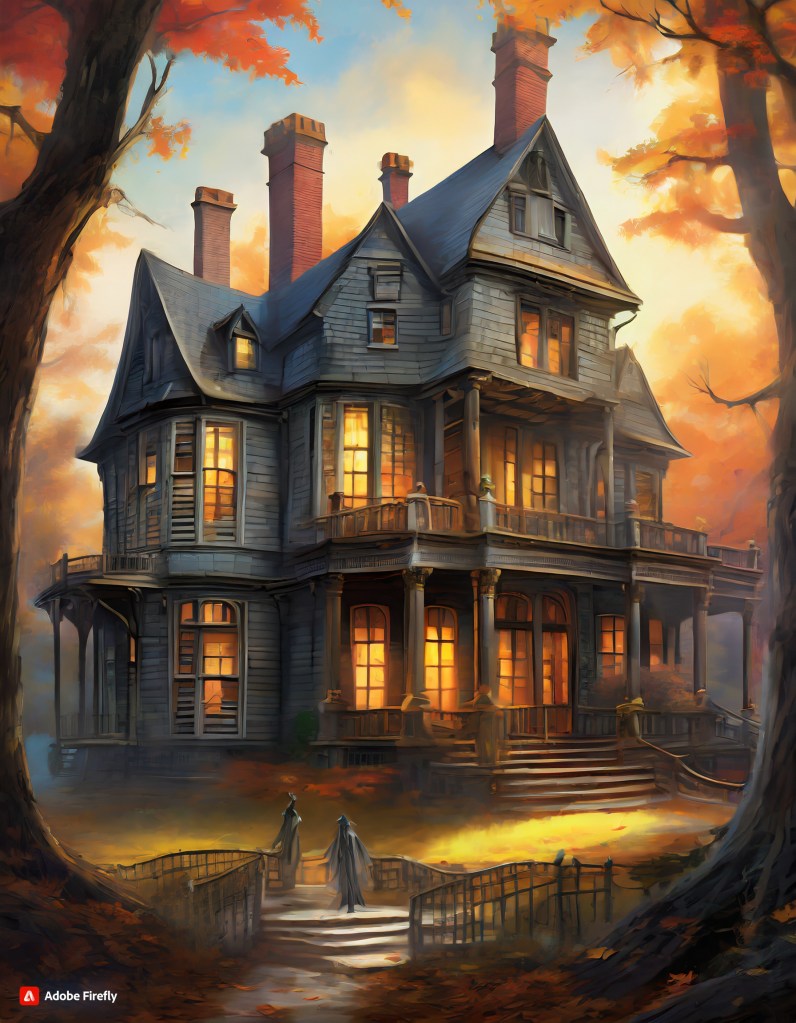
Published in 1851, precisely in the middle of this curious century and its unique milieu, Nathaniel Hawthorne’s famous tale The House of the Seven Gables is deeply interested in this cultural shift from superstitious antiquity to empirical modernity. In the preface to his work, Hawthorne asserts that the text is not a novel, but rather a “romance” and a “work of art” full of “legendary mist” (Hawthorne, 1). Hawthorne asserts that he desires to “mellow the lights” of his text and “deepen and enrich the shadows” (Hawthorne, 3) so as to turn the book into something legendary or even mythological, akin to a popular ghost story or a historical tall-tale. Then, throughout the book, Hawthorne superficially seeks to maintain this legendary or ghostly declaration by continuously mentioning spirits, myths, and curses. The central and titular setting of The House of the Seven Gables is, apparently, a haunted mansion; the sinister nature of the “East Wind” and other omens is mentioned numerous times; and, a haunted portrait acts as a central symbol to the text, as does the curse of the condemned wizard, Matthew Maule.
However, even as he presents these more legendary and paranormal elements, Hawthorne also seems to reject them in his work, along with the very mythology, “romance,” and “legendary mist” that he originally proposed. The “ghosts” of The House of the Seven Gables are not really spirits at all, but they are mere figments of the moonlight, confusions of the narrator’s senses, or merely metaphorical apparitions. The house and the well beside it are not really haunted or cursed either, but they are merely corrupted by old age and poor, “unscrupulous… foundations” (Hawthorne, 13). Even the aforementioned portrait, likewise, is not as possessed or haunted as it seems, but its only secret is an ordinary, old map hung on the wall behind it.
Thus, Hawthorne explains away all of the really legendary and paranormal elements of his so-called mythological romance. Instead, he replaces these older notions of ghosts, spirits, and ghouls with modern inventions and developments. Mesmerism, considered in the nineteenth century to be a “valid… clinical science” (Huang, 151), takes center stage in some chapters rather than more spiritual ghosts and curses. Similarly, steam locomotives, daguerreotype photographs, and other indicative elements of modernity and industry dominate certain sections of the book (Swann, 2). Thus, for as much as The House of the Seven Gables pretends to be, or claims to be, a retrogressive novel of colonial and Puritanical legend, akin to the more gothic works of Washington Irving and Edgar Allan Poe, it actually seems to be a more progressive text, discussing modern developments and inventions rather than older myths and curses.
This project seeks to analyze these, and other, ways in which The House of the Seven Gables rejects, accepts, or modifies the legends that it proposes. Moreover, this work aims to demonstrate how the book is also a forward-thinking and scientific text of American Renaissance literature, as well as a rearward-looking legend or ghost story. Finally, this paper attempts to demonstrate how The House of the Seven Gables actually and successfully combines both of these story-telling techniques to make a new and complex statement about what it means to live in the present, growing towards a scientific and progressive future while remaining firmly rooted in a conservative and legendary past.
The Past
In his preface to The House of the Seven Gables, Nathaniel Hawthorne explains that his work “is a Legend, prolonging itself from an epoch now gray in the distance, down into our own broad daylight,” (Hawthorne, 1). The distant “epoch” to which Hawthorne refers is, of course, New England’s Puritan period, which is both a primary focus of this text, and an “obsession… [that] nostalgically pervaded virtually every form of popular literature in the antebellum period” (Streeby, 446). However, unlike other authors, Hawthorne does not seem to lionize the Puritanical past, but instead he juxtaposes its “gray… distance” with the “broad daylight” of 1851, definitively suggesting a differentiation between an older and eerier time, versus a present age of literal and metaphorical enlightenment. Thus, The House of the Seven Gables’ presentation of the past and its “preoccupation with history” is not meant to be nostalgic or wistful, but perhaps the contrary (Huang, 144).
In the initial chapter of the romance, entitled “The Old Pyncheon Family,” Hawthorne describes both the house of the seven gables itself, and the strange incidents that led to its initial construction (Hawthorne, 9). Unlike the rest of the book, which “is carefully set in a single contemporary summer… this first chapter looks back to the 1690s… and deploys the decent vagueness of ‘once upon a time’” (Swann, 1). According to mythic history and local legend developed throughout the first chapter, the book’s titular mansion is the old house of the Pyncheon family, a wealthy and established tribe that dates back to New England’s earliest era. The original head of the Pyncheon family, Colonel Pyncheon, procured the land for his opulent home by arranging for the execution of its tenant, Matthew Maule, on the charge of witchcraft, thereby causing Maule to curse the Pyncheon line with his final words “God will give [them] blood to drink!” (Hawthorne, 12). Then, apparently in confirmation of the curse of “the reputed wizard” (Hawthorne, 12), the colonel inexplicably dies by choking on his own blood at the housewarming intended to commemorate the completion of his new mansion.
Through its frequent and obvious discussions of witchcraft, wizardry, curses, and legends, the first chapter of The House of the Seven Gables superficially seems to support Puritanical, as well as early nineteenth century, conceptualizations of the reality of the supernatural. The notion that Matthew Maule really was a wizard is supported by the apparent effectiveness of his curse against the colonel, and the justice of his execution is supposedly evidenced by his identity as a wizard. However, a deeper reading of both the opening chapter and the rest of The House of the Seven Gables more directly suggests a complete rejection of these claims. Rather than being a legitimate judicial effort to stamp out otherworldly dangers, “Maule’s witchcraft trial merely shows religion [and superstition to be] convenient mystifications of [Colonel] Pyncheon’s economic motives” for seizing desirable land and building a house (Swann, 2). Colonel Pyncheon’s apparent death from Maule’s curse can likewise be explained in less than fantastic ways. When, later in the novel, Phoebe believes she hears cursed blood gurgling in the throat of another ruthless Pyncheon, Judge Jaffrey, she immediately recognizes the curse as the “exceedingly ridiculous… absurdity which it unquestionably was” (Hawthorne, 111). Moreover, even later in the novel, the entire curse is almost explained away as a perfectly natural “hereditary liability” of the Pyncheon family (Hawthorne, 270). It seems that, due to some reasonable, underlying medical condition rather than magical curses, members of that bloodline may spontaneously “choke with blood” (Hawthorne, 270). Thus, although Hawthorne claims to present his story as a “Legend”, even in a chapter dealing exclusively with mysterious past events he still refuses to incorporate real magic or devilry into the text, relying instead upon mysteries which economic greed, medical science, and coincidence can fully explain.
This same pattern by which Hawthorne presents some ancient piece of mysterious or otherworldly folklore only to retract or question the fantasy of it is repeated elsewhere in the story as well. For example, in the first chapter of the novel, the actual house of the seven gables is predominantly described as a cursed estate, sitting beside a corrupted well on a property haunted by the spirit of Matthew Maule. The house is described as a “gray feudal castle, … a ruin” made of “old material,” (Hawthorne, 10) “a heart, full of rich and somber reminiscences,” (Hawthorne, 28), and a place where “Death [sleeps] across the threshold” (Hawthorne, 18). The “quaint exterior” of the home grows “black from a prevalent East Wind,” (Hawthorne, 9) which is a popular nineteenth century symbol of approaching evil, and “only ghosts and ghostly reminiscences” are said to roam the passages of the haunted mansion, playing “dead music” upon a cursed harpsicord (Hawthorne, 68). Additionally, the natural well beside which the house sits is considered to be “cursed” since it used to have fresh water, but it is now corrupted by underwater gasses and sediments (Hawthorne, 12).
Once again, this language all suggests a definitive, if antiquated, fantastical element to the story, which Hawthorne ultimately chooses to reject. Rather, the ominous and chilling attributes of the house of the seven gables only “assume figurative importance in the novel, with regard to the themes of history, folklore and tradition” (Huang, 147). Moreover, the mansion bears “a striking resemblance to British gothic houses” insomuch as it is not actually “haunted, but [instead] reminiscent of the inhabitants’ collective experiences” (Huang, 146). Thus, the mansion itself “plays upon the tension between the literal and figural aspects of art… [exemplifying] Hawthorne’s well-known concern for the problematic relationship between the actual and the imaginary” (Ullén, 2). Otherwise stated, the house is metaphorically haunted because of the cumulative emotions and symbolic associations that it possesses, but the ghosts of the House of the Seven Gables are not intended to be real, material phantoms. Every time actual poltergeists are mentioned in the narrative, they are disavowed as mere figments of the narrator’s imagination, tricks of the moonlight, or mere rhetorical devices. This can be readily appreciated in passages of the book like Chapter 18, wherein “a whole tribe” of Pyncheon ghosts, from the time of the Puritans to the present day, are described in minute detail, gathering around the lifeless corpse of Judge Jaffrey as it sits at the mansion’s dining table (Hawthorne, 242). Even after this obvious and frightening ghost story, the narrator explains that “the fantastic scene, just hinted at, must by no means be considered as forming an actual portion of our story,” and he further asserts that he was merely “betrayed into this brief extravagance by the quiver of the moonbeams… and shadows” (Hawthorne, 243).
Thus, the reader, like the narrator, must reject the potential ghostly or folkloric elements of the story, even when they are precisely and faithfully described in page upon page of text. Hawthorne lends purposeful ambiguity about the existence of ghosts to his narrative, but he ultimately seems to undermine the possibility of the reality of the supernatural. He explains the tainting of Maule’s well in practical engineering terms concerning the nearby mansion’s bad “foundations” (Hawthorne, 13), and he asserts that the house itself is only black and foreboding because of old age, pervasive bad weather, and a “wilderness of neglect” resulting from bad stewardship (Hawthorne, 132).
Rather than machinating phantoms or malevolent curses, “the real horror of Hawthorne’s republican gothic” is actually focused upon “historical injustice, class antagonisms, and the hypocrisy of wealthy public men” (Streeby, 458). Dark elements of the story, such as the execution of Matthew Maule and the apparent murder of Clifford’s father, are all explained not by spiritual curses or ghostly occurrences, but by the real problems of social injustice, malevolent deception, and blame. Just as Matthew Maule’s witchcraft trial is explained by Colonel Pyncheon’s overwhelming greed and coveting of his good property, the death of Clifford’s father is explained by Judge Pyncheon’s greed and pride.
Thus, Hawthorne defies older, early nineteenth century notions of the reality of spirits and ghosts in favor of more definite ideas of justice, vengeance, and material explanation. In The House of the Seven Gables, Hawthorne is definitely forging a new path for the American novel. He moves away from the sinister and macabre preternatural and metaphysical notions of the past, towards the scientific, natural, and physical ideologies of the future.
The Future
Functioning in sharp contrast to the older topics of folklore, myth, legend, and history commented upon heretofore, in The House of the Seven Gables, Nathaniel Hawthorne also spends a great deal of text discussing modern technologies and topics that were at the futuristic forefront of human industry and innovation in 1851. While some portions of the romance make detailed accounts of the “Gothic mansion” and the “comically old-fashioned spinster” who inhabits it (Reynolds, 270), other sections of the text conversely describe “the paraphernalia of a distinctively modern world” (Swann, 2). Scientific topics, such as photography, telegraphy, railroad construction, and electricity all symbolize the advent of the modern age and the industrial revolution in The House of the Seven Gables, as do pseudoscientific developments, like spiritualism, phrenology, and mesmerism. Similarly, social movements like prison reform, abolition, and progressive developmental reform all provide evidence for the radical cultural revolution that dominated the 1850s and 1860s, up to and including the American Civil War.
A major passage of the romance that deals with the advent of modernity is the train scene of Chapter 17, wherein the two old “owls,” Clifford and Hepzibah, flee their mansion after the death of Judge Jaffrey, falsely implicating themselves in the judge’s totally coincidental death. As opposed to the entirely domestic scenes of the novel’s beginning, wherein Hepzibah is described as an impossibly aristocratic homebody, absolutely chained to her ancestral domain, the scenes aboard the express locomotive, “the magic carpet of the day,” feel incredibly fast-paced and extreme (Swann, 15). After the train begins whirling through the countryside at a rapid velocity, Hepzibah fearfully questions “Am I awake? Am I awake?” in fear of the “fretting and fuming” locomotive speeding her “onward like the wind” (Hawthorne, 221). In this scene, Hepzibah shows both a literal and metaphorical fear of her life ‘running off the tracks,’ as the “structural unity” of her life seems to be “seriously threatened by the turbulent forces of modern American culture” (Reynolds, 268). While the train itself, “the era’s prime symbol of brute force and modern technology,” (Reynolds, 268) blasts across the countryside, the narrator joins Hepzibah in fear that the outside world seems “unfixed from its age-long rest,” by the upheaving forces of industry (Hawthorne, 222).
To the same extent that Hepzibah hates and fears the locomotive, her brother, Clifford, adores the experience as one of freedom and vivacity. A former criminal falsely convicted of murder and tormented in prison by an outdated system of incarceration, Clifford feels free and comfortable on the train and in the modern world at large. “Here we are in the world, Hepzibah!” he claims multiple times, “[We are] in the midst of life! In the throng of our fellow-beings! Let you and I be happy!” (Hawthorne, 223). Clifford “praises various aspects of the modern scene—improved transportation, spiritualism, electricity, mesmerism—all of which, he insists, are dissolving our ties to an oppressive past and preparing the way for a more fluid, mobile, [progressive, and modern future] existence” (Reynolds, 268). Clifford also touts “the liberal treatment of criminals… modern pamphlet novels, magazine stories, animal magnetism… and sensationalism” (Reynolds, 269).
Through Clifford, Hawthorne seems, at least on a superficial level, to fully endorse the great advancements of the nineteenth century, claiming that novel new technologies will lead to the uplift of humanity and the betterment of everyday life. However, on a more profound level, Hawthorne’s endorsement of modernity seems just as shallow and superficial as his detestation of history. No sooner does Clifford tout the excellence of the future than another passenger onboard the train, perhaps representing Hawthorne himself, insists that all of Clifford’s ideas are “nonsense” and “humbug” (Hawthorne, 225). Indeed, as much as Clifford hates the Pyncheon mansion for being “a rusty, crazy, creaky, dry-rotted, damp-rotted, dingy, dark, miserable old dungeon,” his alternative vision of nomadic life on the road, always being “everywhere and nowhere,” seems little better and certainly unmaintainable (Hawthorne, 226). Thus, while Hawthorne does not “necessarily endorse [Clifford’s] radicalism, … he does approve of his hope” (Swann, 2) for an improved future, if not one totally severed from the physicality and definition of the past.
Similar to Clifford, another character in The House of the Seven Gables who represents progressivism and the future is Holgrave, the daguerreotypist and professional mesmerizer who lives in the mansion thanks to Hepzibah’s charity. Holgrave “is a full embodiment of the anarchic elements of modern popular culture,” as much as other characters, like Hepzibah and the judge appear “old-fashioned and conservative” (Reynolds, 270). Moving away from old myths and legends and towards modernity, industry, and science, Holgrave embraces mesmerism, electricity, and daguerreotype photography specifically “because they were all the trendiest ideas of 1851, all to do with communication, and all somehow connected with the new ideas of a universal electromagnetic field” (Swann, 5). By embracing mesmerism, which was considered to be a “respected technique of clinical hypnotism [and a] valid form of reformatory psychological science” (Huang, 151), Holgrave asserts his revolutionary belief that science and psychiatry can lock in to what Hawthorne might call “the truths of the human heart” (Hawthorne, 1) better than faith, religion, myth, or tradition. In Chapter 13, Holgrave also shows that he writes popular fiction for “penny-papers” as he tells the narrative of Alice Pyncheon. Such pulp stories also represented futuristic practices of the mid-nineteenth century, since “opportunistic publishers took advantage of new technological improvements, particularly the cylinder press introduced in 1847, to manufacture such lurid, [and sensational] pamphlet literature” (Reynolds, 170). Through all of these avenues—mesmerism, photography, and sensationalist literature—Holgrave advocates the newest ideas of the day, butts heads with the ultraconservative spinster, Hepzibah, and prepares to step boldly into the future at the cost of obliterating the past.
Nowhere is Holgrave’s radical progressivism seen more vividly than in Chapter 12 of the book, which is named “The Daguerreotypist” in his honor. In that chapter, Holgrave delivers his famous (or infamous) “dead men” speech to Phoebe, in which he absolutely advocates a sudden overthrow of current conservative systems, in exchange for a rapid, progressive, and continuously-evolving new form of society, somewhat like the nomadic or gypsy lifestyle previously attributed to Clifford. In his speech, Holgrave pushes back against conservatism, tradition, and old-fashioned mentalities as he exclaims “What slaves we are to bygone times—to Death, if we give the matter the right word!” (Hawthorne, 160). He continues:
A dead man sits on all our judgment-seats; and living judges do but search out and repeat his decisions. We read in dead men’s books! We laugh at dead men’s jokes, and cry at dead men’s pathos! We are sick of dead men’s diseases, physical and moral, and die of the same remedies with which dead doctors killed their patients! We worship the living Deity according to dead men’s forms and creeds. Whatever we seek to do, of our own free motion, a dead man’s icy hand obstructs us! (Hawthorne, 160)
Clearly, this fearsome and energetic speech demonstrates “Holgrave’s enterprising and radical reform plans,” (Huang, 150) which are completely antithetical to older notions of ghosts, ancestral veneration, and the conservative factors of tradition. Holgrave’s wholesale love of all things new and progressive “commits him to a visionary future built upon the complete destruction of the past,” (Huang, 150) as well as the obliteration or transformation of visible symbols of the past, such as the house of the seven gables itself. Furthermore, Holgrave’s complete orientation towards the future makes him “the sworn foe of wealth and all manner of conservatism; … he [becomes] a wild reformer… who advocates for continuous revolution based upon a complete break from the bondage of the past” (Huang, 157).
Both Clifford’s spastic declarations aboard the train and Holgrave’s speech discussed above provide vivid and descriptive calls for radical change and futuristic reforms. However, Hawthorne neither seems to wholeheartedly agree with Clifford’s vibrant dream of futuristic technology, nor Holgrave’s revolutionary attitude and liberation mentality towards current social systems. Although Hawthorne does employ such diction as “old,” “black-shingled,” “damp,” and “dark,” to describe the physical problems of the house of the seven gables, he does not seem to advocate the revolutionary destruction of the house that Holgrave desires. Similarly, although Hawthorne builds Clifford’s excitement aboard the train to a point of childlike jubilation, he does not seem to agree with Hepzibah’s brother that technological innovation will lead to a perfect world.
If Hawthorne truly advocated for the sudden and violent overthrow of current conservative systems, like Holgrave and Clifford seem to desire, he would paint both of these characters as glorious heroes who are ultimately successful in their goals. But, instead, Hawthorne tends to portray both characters as madmen at the fringe of society, oftentimes rebuked by others and ultimately unsuccessful in their extreme aspirations. Even though he was wrongly accused, as a former prisoner and convicted murderer, Clifford’s character would be the subject of severe social stigmas in the mid-nineteenth century, when convicts were popularly seen “in the blackest hue” as henchmen of the devil, operating against the “shining forces of civilization” (Reynolds, 251[1]) Moreover, Clifford’s speech aboard the train, in which he touts technology and modernity, makes him appear like a mere child with an overzealous imagination, provoking the disdain and discomfort of fellow passengers. Similarly, Holgrave’s character appears overzealous and extreme throughout much of the novel. While his work as a mesmerizer would have been accepted in the mid-nineteenth century, it certainly was a fringe occupation, as Hepzibah notes when she considers Holgrave to be a “practicer of animal magnetism… and the Black Art” (Hawthorne, 78). Moreover, while Holgrave’s work as a daguerreotypist may have been seen as a trendy new occupation, such work would not have been considered respectable in 1851, as is evidenced by the fact that Holgrave lives in Hepzibah’s garret.
Based upon his correspondences and personal conversations, it is clear that Nathaniel Hawthorne appreciated several elements of modern life and new technology. He considered Edward Hitchcock’s avant-garde scientific treatise Religion of Geology to be among his favorite books, along with such other thoroughly modern texts as Oliver Wendell Holmes’s Three Essays on Photography and certain works concerning Ada Lovelace and Charles Babbage’s development of the analytical engine (Swann, 7). However, throughout The House of the Seven Gables, “Hawthorne seems to be suggesting that these new technologies are less liberating than [they] at first appear,” (Swann, 14), and, by the romance’s ending, Hawthorne ultimately seems to reject all of the claims presented about violent reform or nomadic lifestyle made throughout the text.
So, if Hawthorne both rejects antiquated expressions of folklore and superstition, as aforementioned, and he also rejects an absolute transition to modernity, what is the stance of his book upon these matters? Can any middle ground be located between a total acceptance and a total rejection of the modern world?
The Present
As hinted at above, Nathaniel Hawthorne’s masterpiece, The House of the Seven Gables, uses both ancient and futuristic elements to develop a definite message that progressive growth and development are splendid, but only so long as they are firmly rooted in the conservative stability of the past.
While early chapters describe the “Old Pyncheon Family” in terms of historic legend, tradition, and myth, later chapters describe “The Pyncheon of Today” before moving on to alternative visions of future development and growth, consisting of extreme advancements in technology, society, and humanity itself. Whereas Maule’s witchcraft trial in Chapter 1 “presents the imaginary as the actual,” by describing wizardry as a real and legal offense, the train scene, and other passages from near the end of the book, “present the actual as the imaginary,” since they portray real types of technology as almost too good or exciting to be legitimate (Ullén, 30). Thus, the overall structural principle of the novel is characterized by “chiastic inversion, to the effect that the second half of the narrative subtly, but significantly, [questions, complexifies,] and repeats the events of the first half, in an approximately inverted order” (Ullén, 2). Through this genius structuring, “the dialectical allegory of Hawthorne’s romance admonishes us… to turn towards the past with the ambition of finding within it the potential, if unrealized, ideal [future that] it once held” (Ullén, 31). In this way, Hawthorne’s romance encourages readers to look backward in the spirit of looking forward, and the text thematically compels its audience to find hope, interest, and idealism in the past, rather than the mere degradation and perverse disrepair seen in the physical house of the seven gables.
Beginning in Chapter 18, wherein Judge Pyncheon’s corpse is described ad nauseam, Hawthorne also repeats this symbolic proposal to live in the present, relying on both aspects of the past and the future, as he simultaneously warns against living in only one or the other. In the same way that the judge is reduced merely to a lifeless corpse and a ghost, fading away into the haunting legions of the past in Chapter 18, so too is the judge reduced to a mere modern photograph by Holgrave in Chapter 19. In either case, the judge suffers a “grotesque… and terrible invisibility,” as he loses the possibility of actually living in the present, rather than being condemned to either the past or the future (Kelly, 250).
Similarly, Hawthorne embraces the present and it myriad possibilities as he contemplates both the mythical past of the Pyncheon family in Puritan times in the first chapter, and various characters’ interpretations of the future in later passages. While, “on the one hand, Hawthorne lends retrospective historical depth to modern themes by tracing the Maule/Pyncheon connection back to Puritan times” and the seventeenth century (Reynolds, 270), Hawthorne also addresses the slippery slope between “future reformism and revolution,” as he embraces the one but disavows the other (Swann, 3). Thus, Hawthorne “asks for historical continuity regarding gradual sociohistorical progress and renewal,” and he rejects the total overhaul of the past in favor of the technologically driven future that both Holgrave and Clifford recommend (Huang, 163). In some ways, Hawthorne’s romance “suggests that the dominant mode of representation is always historical… [with] an implied criticism about the failure of modern technology [because it] cannot truly abolish or redeem history” (Swann, 16).
Indeed, The House of the Seven Gables reflects not only Hawthorne’s attempts to grapple with the implications of modern technologies on a transcendental conception of personal identity, “but also, specifically in the love story of Holgrave and Phoebe, his continued efforts to reconceptualize the meaning of the romance as an artistic and decidedly ethical mode of relation between the self and others” (Kelly, 233). This latter message is exemplified only at the very end of the book, when Holgrave proposes marriage to Phoebe at the house of the seven gables, despite the fact that the dead body of the judge is in the adjacent room. Although he is “the daguerreotypist” and the absolute symbol of modernity, progress, and revolution, in that scene, Holgrave also reveals that he is secretly the descendent of Matthew Maule, thus affirming his own connection to New England’s rich history. Therefore, the happiness of marriage is only achieved for Holgrave when he finally voices his connection to the past, rather than only to the future. In a similar way, Phoebe must embrace the liberal element of the future by agreeing to wed Holgrave, despite her personal and familial tendencies towards the strictly conservative Puritanical past.
“Active, efficient, and cheerful,” although Phoebe is part of an ancient lineage, she also comes to represent a new generation of dynamic and modern American women full of pluck and industriousness, in juxtaposition to the “odd and cranky Hepzibah” (Reynolds, 376). Parallelly, Holgrave represents a modern member of an ancient family when he reveals his ties to the “wizard Maule” (Reynolds, 376). Thus, both Phoebe and Holgrave, as representatives of an entire generation of young Americans from the 1850s, experience an existential “transformation from the past to the present” as they recognize their ancestral roots whilst simultaneously “symbolizing desperately-needed reform” and “the possibility of change and progress” (Huang, 150). Additionally, the union of Phoebe and Holgrave in the final pages of The House of the Seven Gables “interrogates the convention of the happy ending” by providing a complex marriage of both characters and ideologies “which seems to recognize the reconciliation of a [broader] struggle between two classes, [the Maules and the Pyncheons,] that have lasted for over one hundred and fifty years” (Swann, 17).
Finally, as exemplified by the marriage of Phoebe and Holgrave, a dramatic union of old and new, Pyncheon and Maule, progressive and conservative, is accomplished in the present, which, “Hawthorne optimistically insists, is the task of romance” (Kelly, 285). Moreover, it is only once this union is achieved, in the very final paragraphs of the text, that the past ghosts of The House of the Seven Gables are released to “float heavenward,” (Hawthorne, 277) and the possibility of a future paradise really seems attainable.
Works Cited
Hawthorne, N. (2007, originally 1851). The House of the Seven Gables. New York, NY: Barnes & Noble Classics.
Huang, Z. (2019). From “Purified with Fire” to “That Impression of Permanence”: Holgrave’s Conversion in The House of the Seven Gables. Columbus, OH: Ohio State University.
Kelly, S. J. (2011). Hawthorne’s “Material Ghosts”: Photographic Realism and Liminal Selfhood in The House of the Seven Gables. (47th ed., Vol. 3, Papers on Language and Literature). Wilkes-Barre, PA: Papers on Language and Literature.
Koropisz, M. (2020, July 18). Why is the Victorian Era considered so Spooky? Retrieved November 21, 2020, from https://www.youtube.com/watch?v=9D-xdFtamr8
Reynolds, D. S. (1988). Beneath the American Renaissance: The Subversive Imagination in the Age of Emerson and Melville. Alfred A. Knopf, New York.
Streeby, S. (1996). Haunted Houses: George Lippard, Nathaniel Hawthorne, and Middle-Class America. Detroit, MI: Criticism.
Swann, C. (1991). The House of the Seven Gables: Hawthorne’s Modern Novel of 1848 (86th ed., Vol. 1, The Modern Language Review). Cambridge, United Kingdom: Modern Humanities Research Association.
Ullén, M. (2006). Reading with “The Eye of Faith”: The Structural Principle of Hawthorne’s Romances (48th ed., Vol. 1, Texas Research Library). Stockholm, Sweden, and Austin, TX: Stockholm University and Texas Studies in Literature and Language, published concurrently.
[1] Quoting The Trial of George Crowninshield, by J.J. Knapp and John Francis Knapp, page 587, volume iv. This was a popularized penny-paper account of the prominent Salem, Massachusetts, White murder trial, upon which Clifford’s conviction in The House of the Seven Gables may have been based. In the Victorian era, penny-papers like this one, also known as penny-dreadfuls, were known for their dramatic portrayals of court cases, horror stories, and other events.
 antonioromancampos.com